Plumbing leaks can waste substantial water and lead to significant water damage. It’s essential to identify leaks in your home as quickly as possible and fix them reliably. Let’s explore the role of leak detection in limiting water damage and minimizing remediation costs.
The Often Hidden Nature of Plumbing Leaks
Some leaks, such as burst pipes, are obvious and demand your immediate attention. Yet, many leaks are much more subtle. They can go on for extended periods before you even notice the symptoms, which makes them even more dangerous. That’s why professional leak detection is such an important tool. It’s also why you should schedule a plumber at the earliest signs of a potential problem. Even if you don’t notice problems, schedule an inspection at least once a year.
There are a variety of potential causes of hidden leaks in homes:
- Invasive tree roots
- High water pressure
- Old and weakened pipes
- Clogs and other blockages
- Corroded pipes and connections
- Landscaping and irrigation issues
- Structural movement of the foundation
- Excess condensation in attics and basements
Monitor for the indications that you have a potential leak:
- Musty odors
- Foundation cracks
- Increased water usage
- Mold or mildew growth
- Reduced water pressure
- Bubbling or peeling paint or wallpaper
- Water stains on ceilings and other surfaces
- Ponding water or soggy patches on your lawn
Water Waste
Plumbing leaks lead to a considerable amount of wasted water. The U.S. Environmental Protection Agency estimates that the average household wastes 10,000 gallons annually due to leaks. That’s enough water to wash about 270 loads of laundry. A running toilet may not damage your home, but it can waste 200 gallons a day or about 6,000 gallons per year. A dripping faucet can waste 3,000 gallons annually, and leaky showerheads waste about 500 gallons yearly. You’re looking at even bigger amounts if you have a leak, for instance, in your slab plumbing.
High Water Bills
Leaks can also drive up your bills, and it can happen incrementally, slowly creeping up without you realizing it. That’s why you should track your water usage monthly and annually. If an unexplained spike occurs, you’ll know that you’re probably dealing with a leak. Your water bill covers more than just water used, but the provider may have no way of recognizing that you have a leak. The average cost of water in the U.S. is about $1.50 per 1,000 gallons. That means that the average home is spending about $15 unnecessarily, which is why it’s often difficult to notice. If, on the other hand, you have a major leak, your water bill could go up by $25 or more a month.
Water Damage Remediation
When you experience a major leak, the cost of the pipe repair is often the least of your worries. Water damage remediation can be expensive. That’s because there are several phases to successful remediation. The remediation team must remove the water and any materials and possessions you can’t recover. They must dry the affected area, remove any mold growth, and sanitize all surfaces. Then comes the finishing, such as installing drywall, painting walls, putting new flooring in, buying furniture, and so on.
High-Usage Monitoring
Monitoring for high usage is one way to detect leaks. Tracking your bills can reveal a leak, but you may not notice the problem for a month. You can use your water meter to determine if you have a leak somewhere. Many local water companies offer high-usage alerts, but you may have to opt in by phone or through a website.
Leak Detectors
Leak detectors for the home are the best way to achieve early detection. There are several techniques through which these devices detect leaks, and some models use multiple means. Those include measuring conductivity, flow rate, sound, moisture, and so forth. Traditional leak detectors produce an audible alarm when they detect a leak.
Smart Features
Modern leak detectors are often smart devices. Wi-Fi is the base capability that sets a smart device apart from a regular one. That allows the leak detector to push notifications rather than just sound an alarm. Your leak detector could, for instance, send a message to your phone no matter where you are. It also allows for remote monitoring by monitoring companies. Many home security companies monitor for and respond to emergencies like plumbing leaks.
Shut-Off Valve Control
The most advanced leak detectors for the home have remote control over the main shut-off valve. When they detect a leak, they can shut off the water supply, preventing all water damage. This is the most expensive option but provides the best protection.
Professional Leak Detection
If you suspect a leak, disable your water supply and schedule a plumber for leak detection as soon as possible. There are many benefits to professional leak detection.
- Early intervention
- Fast and precise detection
- Noninvasive leak repair methods
Professional local plumbers also have a wide range of detection techniques at their disposal. Which is best in your situation depends on the nature of the problems you’re experiencing. Let’s look at the four main methods used.
Video Inspection
Video inspections are a powerful tool for diagnosing many plumbing problems. This is where a plumber uses a high-definition camera attached to a cable. The plumber can snake the cable through drains and pipes, including as far as the sewer line. The video transmits to a high-definition monitor that lets the plumber see the leak and other issues clearly.
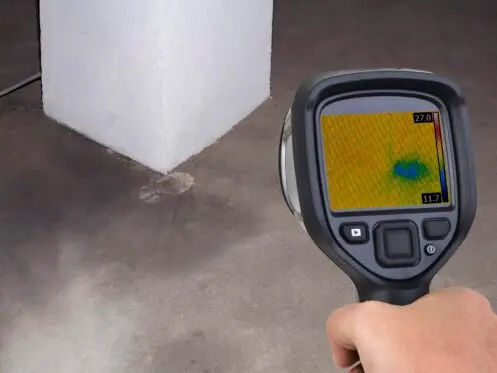
Thermal Imaging
Leaks create heat energy, which thermal imaging cameras can detect. Sophisticated cameras can detect these leaks through walls and even much thicker obstructions. Via monitors, these systems provide a visualization that the plumber can use to pinpoint the leak. This approach is also very useful when there are multiple leaks within a single system.
Acoustic Detection
Leaks create sound, and some are even loud enough to hear through the walls. That said, even leaks that aren’t loud enough for humans to hear are still making sound. Acoustic leak detectors use sensitive sensors to pick up that sound and amplify it so the plumber can hear it. Many modern systems also provide a visual representation so the plumber can “see” it.
Moisture Meters
A moisture meter can detect how much moisture is in a surface, such as drywall. Consider a water stain on a ceiling. A plumber can determine if the stain is old and the ceiling is now dry. If it isn’t, the plumber knows an active leak is occurring.
Professional Leak Detection in the Greater San Jose Area
Plumbtree Plumbing & Rooter is a trusted, local plumbing company in San Jose, CA. Our skilled, licensed plumbers are available for same-day appointments and around the clock for emergencies. We have the most advanced leak detection equipment available. Our team performs all manner of pipe repairs and replacements, including trench and trenchless repairs and replacements.
Call today or contact us online to schedule an appointment.